See Your Reports Clearly
Denied for a loan or paying a rate that feels wrong? The answers are usually sitting in your credit reports. Start by reading them properly. Find out what the lenders see.
When a lender turns you down or quotes a rate that feels too high, your credit reports may hold information worth a closer look. You might find an account you do not recognize, a balance that is wrong, a late payment you believe was reported in error, or a collection entry that is not yours. Until you understand the details, it is hard to know what deserves attention.
Fort Worth Credit Repair reviews credit reports to help customers understand what is actually on them. We explain account statuses, payment history, balances, inquiries, and the other reporting details that shape your profile. The review looks for potential inaccuracies and lays out your options. It does not promise a particular score change or lending result.
Whether you are preparing for a mortgage in Fort Worth, financing a vehicle in Arlington, or applying for an apartment near TCU, the review begins with what your reports actually show, not with a guess about what might be wrong.
These are actual results from past clients, previously shared on Instagram. Every credit file is different, so treat these as examples of what the process can look like, not as a promise of what yours will do.
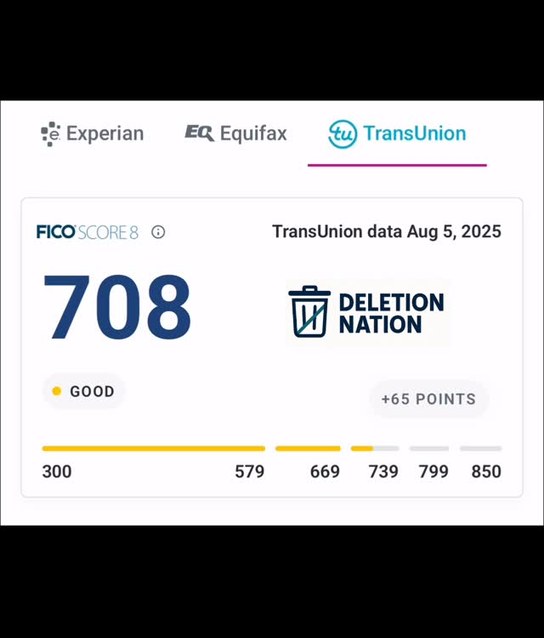
A client’s TransUnion FICO score reached 708 in August 2025, up 65 points in a single update.
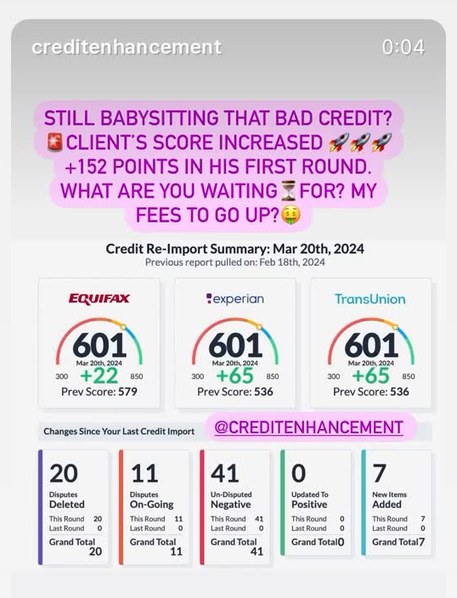
In a first round in March 2024, 20 disputes were deleted and all three bureaus landed at 601: Equifax up 22 points from 579, Experian up 65 from 536, and TransUnion up 65 from 536.
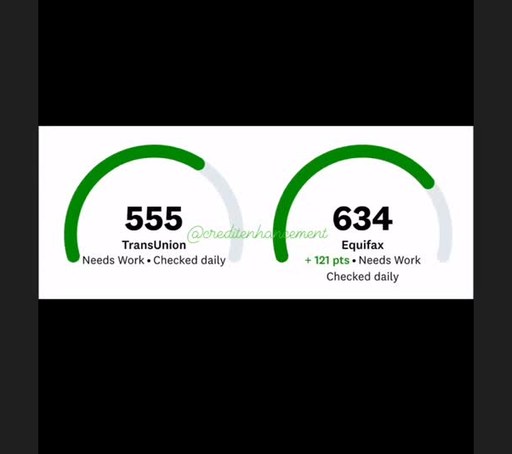
Results vary from person to person and depend on what is in each credit file. Nothing here promises a particular score increase or deletion.
A review starts with the same question every time: what are the bureaus actually saying? For a dollar, you can read your own reports from all three bureaus first, so the review starts with facts you have already seen.
Bring what you find to the review, and the conversation starts three steps ahead.
$1 to MyScoreIQ opens a week of report access; after that it runs $34.99 a month. Cancel anytime.
A useful review looks at the whole picture instead of one negative entry. Here are the areas we go through, and why each one may matter.
We go through reported account names, ownership details, opening dates, and statuses to spot accounts that look unfamiliar or incorrectly reported.
We show how payment patterns, late payments, and account statuses appear on your reports, and what to check when the details look wrong.
We explain reported balances, available revolving credit, and how scoring models commonly judge utilization.
We look closely at what is shown for collection accounts and charged-off debts, including the amounts and statuses reported.
We explain hard and soft inquiries in plain terms and flag any inquiry you do not recognize or believe was reported in error.
We translate account entries into straightforward language, so you can decide your next move with the facts.
Our review flags information that may be inaccurate, incomplete, unfamiliar, or inconsistent with your records.
We draw a clear line between information that may be wrong and accurate negative reporting that stays.
Tell us what brought you here: a car loan, a mortgage, an apartment application, a high rate, or something else credit-related.
We go through the reports and account details you have, focusing on what is relevant to your situation.
We help you spot entries that may deserve a closer look or a factual dispute.
We lay out possible next steps and talk through habits that may support your wider financial goals.
Yes, when you can. Equifax, Experian, and TransUnion can report the same account differently, so checking all three gives you a fuller picture. We encourage customers to look at every report available.
A review may surface accounts or inquiries you do not recognize. If you suspect identity theft, report it through the proper identity theft and credit reporting channels as well.
No. Checking your own report is generally treated as a soft inquiry and does not lower your score. That is different from lender applications, which usually involve hard inquiries.
It helps to have them, and the conversation goes further when you do. But you can call first if you need help figuring out how to get them.
Not sure what lenders are seeing? Take a closer look at your reports with us. Call (817) 270-9494.